Garage doors run on a track system with a dozen moving parts, and most of the grinding, screeching, or jerky movement you hear comes down to one fix: fresh lubricant in the right spots. Here's exactly how to lubricate a garage door for smoother, quieter operation in under 20 minutes.
- Lithium or silicone-based garage door lubricant beats WD-40 for long-term smoothness in 2026 — WD-40 is a cleaner, not a lubricant.
- Rollers, hinges, springs, and the track’s roller channel need lubricant every 3-6 months. Buy: silicone spray for rollers, white lithium grease for springs.
- Never lubricate the track surface itself — grease there attracts dirt and makes rollers slip.
- A door that’s still noisy after lubrication usually has worn rollers, not a lubrication problem.
Why this matters
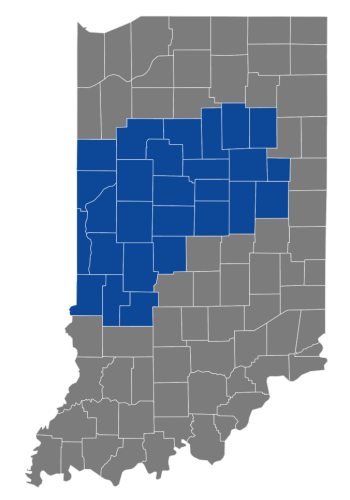
A garage door opens and closes 1,500 to 3,000 times a year in an average household, and every cycle puts friction on the same hinges, rollers, and torsion springs. Dry metal grinding against metal wears parts down faster and puts extra load on the opener motor. Fairmount Door has served Hoosier homeowners for over 50 years, and a dry garage door is one of the most common reasons for a service call that could have been prevented with a $10 bottle of lubricant.
Skipping lubrication doesn't just mean noise. It shortens the life of rollers that typically last 7-10 years, strains torsion springs rated for 10,000-15,000 cycles, and can eventually cause a door to bind or stick off track. If your rollers already sound rough no matter what you spray, the issue may be worn roller replacement for sticking or noisy doors rather than a lubrication gap.
What you'll need
- Silicone spray lubricant or white lithium grease (avoid WD-40 as a long-term lubricant — it's a solvent, not a grease)
- A clean rag or paper towels
- A step ladder
- A soft-bristle brush or old toothbrush for cleaning tracks
- 15-20 minutes
- Safety glasses (springs and hardware sit overhead)
Skip anything petroleum-based or all-purpose oils like 3-in-1. They attract dust and grit, which turns into a grinding paste inside the tracks within a few months.
The steps
1. Disconnect the opener and move the door manually
Pull the red release cord so you're operating the door by hand, not the motor. This accomplishes two things: it isolates the moving parts you're about to grease, and it lets you feel resistance points that a motor would mask. If the door feels heavy or uneven when moved by hand, that's a spring problem, not a lubrication problem — check for early warning signs of a failing spring before you continue.
Common mistake: skipping this step and lubricating a door that's still connected to the opener, which means you never actually feel the mechanical resistance you're trying to fix.
2. Clean the tracks and hardware first
Wipe down both vertical and horizontal tracks with a dry rag to remove built-up dust, old grease, and cobwebs. A soft brush works into the corners where rollers ride. This step matters because spraying lubricant over existing grime just creates a sticky film that grabs more dirt going forward.
Common mistake: spraying lubricant directly onto a dirty track. Clean first, lubricate second, always.
3. Lubricate the rollers
Spray silicone lubricant directly into the roller bearings, not the wheel surface itself. Rotate each roller by hand as you spray so the lubricant works into the bearing, not just the outside. Do this for all 8-10 rollers on a standard double door.
Expect a noticeably quieter roll within the first few open-close cycles. If a roller doesn't spin freely after lubrication and instead wobbles or grinds, that roller is worn out — no amount of grease fixes a cracked nylon roller or a rusted bearing.
4. Grease the hinges
Apply a small amount of white lithium grease to each hinge joint where the door panels fold. Work the door up and down once by hand to distribute it into the pin. Over-application here just means excess grease drips onto the garage floor, so a thin coat is enough.
Common mistake: dumping grease on the outside of the hinge instead of at the pivot pin, which does nothing for the actual friction point.
5. Lubricate the torsion springs
Spray a light coat of lithium grease along the full length of the torsion spring above the door. This reduces coil-on-coil friction, which is the leading cause of premature spring failure. Never adjust spring tension yourself — this step is lubrication only, not repair.
If the spring already looks stretched, gapped, or has a visible separation in the coil, stop and get it inspected professionally rather than lubricating around a problem that needs replacement.
6. Coat the opener chain or screw drive
For chain-drive openers, apply a small amount of white lithium grease along the chain. For screw-drive openers, use the specific screw-drive lubricant recommended in your opener's manual — standard grease can gum up a screw-drive rail. This step cuts down on the mechanical rattle that travels through the ceiling into the house above the garage.
7. Cycle the door and wipe excess
Reconnect the opener and run the door up and down 3-4 times to work the lubricant fully into every joint. Wipe any drips off the floor and off the bottom seal — excess grease on the weatherstripping attracts grit and can degrade the rubber faster.
Expected outcome: a door that opens and closes with a smooth, low hum instead of a grind, squeal, or metallic clank.
Still hearing grinding after lubrication?
Get a repair estimate for worn rollers, springs, or opener parts.
Troubleshooting
Door is still loud after lubrication. Worn rollers are the most common culprit — nylon rollers wear down over 7-10 years and no lubricant restores a cracked wheel.
Door reverses or stops before closing fully. This is almost never a lubrication issue. Check safety sensor alignment first, since misaligned sensors trigger a reverse even on a perfectly lubricated door.
Door closes crooked or faster on one side. Uneven closing points to spring tension imbalance, not friction. Don't try to compensate with extra grease on one side.
Grease is dripping onto the floor or car. You over-applied. A thin, even coat is enough on every part — springs, hinges, and rollers all need a light film, not a visible coating.
Door feels heavy to lift manually even after lubrication. That's spring tension loss, and it's a sign the springs are approaching the end of their 10,000-15,000 cycle rating rather than a grease problem.
Lubricant seems to disappear within weeks. Dust and outdoor exposure strip lubricant faster in garages with drafty seals — check whether your weatherstripping needs replacing if this happens repeatedly.
“If the door still grinds after fresh lubricant, the problem is a worn part, not a dry one.”
Tools and resources
- Silicone-based garage door lubricant spray
- White lithium grease for hinges and springs
- Soft brush for track cleaning
- A maintenance contract for overhead doors if you'd rather have a technician handle lubrication on a set schedule
- Owner's manual for opener-specific lubrication guidance on chain vs. screw drives
Most residential doors need this full routine every 3-6 months. Commercial and high-cycle doors on rental units or busy garages benefit from quarterly attention instead.
What to do next
Lubrication is maintenance, not repair. If you went through every step above and the door still binds, sticks, or sounds rough, the parts themselves are the problem, not the friction. Get a straight answer on whether you need repair or replacement before you spend another 2026 season fighting a door that's past the point lubricant can fix.
FAQ
How often should you lubricate a garage door?
Lubricate a garage door every 3-6 months for standard residential use. Doors that open more than 5-6 times a day benefit from quarterly lubrication instead.
What is the best lubricant for a garage door?
Silicone spray or white lithium grease works best for garage door parts in 2026. Avoid WD-40 for long-term use since it’s formulated as a cleaner and solvent, not a lasting lubricant.
Can you use WD-40 on a garage door?
WD-40 can loosen a stuck part temporarily but evaporates quickly and won’t provide lasting lubrication. Silicone or lithium-based products hold up far longer on rollers, hinges, and springs.
Should you lubricate the garage door track?
No — lubricate the rollers, not the track surface. Grease on the track itself attracts dirt and grit that makes rollers slip rather than roll smoothly.
Why is my garage door still noisy after lubrication?
Persistent noise after lubrication usually means a worn roller, loose hardware, or a spring nearing the end of its cycle life rather than a friction problem. A physical inspection is the next step.
Is it safe to lubricate garage door springs yourself?
Applying lubricant to torsion springs is safe as a maintenance task, but adjusting spring tension is not a DIY job. Leave tension adjustments and spring replacement to a technician.
How long does garage door lubrication take?
A full lubrication pass on rollers, hinges, springs, and the opener chain takes about 15-20 minutes for a standard double-car door in 2026.
Does lubricating a garage door reduce energy costs?
Lubrication itself doesn’t affect insulation or energy costs, but a smoothly running door reduces strain on the opener motor and extends the life of the system, which lowers long-term repair costs.
One last thing
The single most skipped spot isn't the rollers or hinges — it's the torsion spring, because it sits overhead and out of sight. That coil-on-coil friction is what quietly shortens a spring rated for 10,000-15,000 cycles down to a fraction of that lifespan, and a 10-second spray during your next lubrication pass is cheaper than any spring replacement call.
Related guides
- How to spot early warning signs of a failing spring
- How to realign garage door safety sensors
- How to fix a garage door that closes unevenly
- Garage door roller replacement for sticking or noisy doors