Commercial buildings with hazardous occupancy, multi-tenant risk, or insurance requirements need overhead doors that carry a real UL fire rating — not just a door that looks heavy-duty. This guide ranks the fire-rated overhead door types commercial property managers actually specify in 2026, what each rating means, and where each type fits.
- UL-listed rolling steel fire doors carry the highest common rating (3-hour) and win for warehouse and manufacturing openings — Buy.
- Fire-rated sectional steel doors (1.5-hour) fit loading docks with daily foot and vehicle traffic — Buy.
- Fire-rated counter shutters (20-minute to 1-hour) cover cafeteria and service-counter openings — Consider.
- A door that looks like a fire door but carries no UL label fails inspection and voids insurance coverage — Skip.
- NFPA 80 requires annual fire door assembly inspection regardless of which type you install in 2026.
Why This Matters
A fire-rated overhead door is a life-safety assembly, not a style choice. It's tested and labeled to hold back fire and smoke for a defined period — 20 minutes, 1 hour, 1.5 hours, or 3 hours — long enough for occupants to evacuate and fire crews to respond.
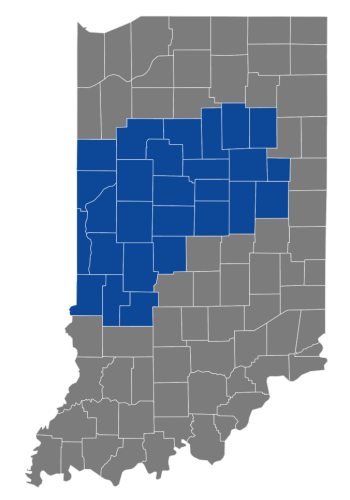
Building codes tie the required rating to occupancy type and wall assembly, and insurers check for it during underwriting. Fairmount Door has handled commercial overhead door installation and repair across Indiana for more than 50 years, and the door that fails inspection most often isn't a bad brand — it's a non-rated door installed where code called for a rated one.
Get the rating wrong and you're not looking at a fine. You're looking at a failed occupancy inspection, a denied insurance claim after a fire, or a door that has to come out and get replaced before the building can reopen.
How We Ranked
Each fire-rated overhead door type below is evaluated against three factors: the UL fire-resistance rating it's tested to carry, the commercial occupancy types it's actually specified for, and the ongoing maintenance burden that keeps the rating valid over time.
Ratings and testing standards referenced here (UL 10B, UL 10C, NFPA 80) are published, code-referenced standards — not internal test results. Application fit reflects how these door types are used across warehouse, manufacturing, and mixed-occupancy commercial buildings in 2026.
The Ranked List
1. UL-Listed Rolling Steel Fire Door (3-Hour Rated)
The workhorse for large commercial openings. Rolling steel fire doors are the standard pick for warehouse, manufacturing, and distribution openings where the wall assembly itself carries a 3-hour rating and the door has to match it.
They coil into a compact steel housing above the opening and close automatically when a fusible link melts or a smoke detector signals the closer — no manual action required. Fairmount Door installs and services these on warehouse overhead doors where a fire wall separates storage zones from production or office space.
The catch: they need a dedicated fire-rated header and jamb assembly, not a retrofit into a standard sectional door frame. Verdict: Buy for any opening where the wall rating is 2-hour or higher.
2. Fire-Rated Sectional Steel Door (1.5-Hour Rated)
The pick for openings with daily vehicle and foot traffic. Fire-rated sectional doors track vertically like a standard commercial door but use a fire-rated panel construction and a self-closing mechanism triggered by heat or smoke detection.
They're common at loading docks and equipment bays where staff cycle the door dozens of times a day and a rolling steel door's slower cycle time doesn't work operationally. Fairmount Door handles these installs where the same opening needs both daily use and a fire separation requirement — see the warehouse door guide for cycle-rating context.
Verdict: Buy when the opening needs frequent daily operation on top of a 1.5-hour rating requirement.
3. Fire-Rated Counter Shutter (20-Minute to 1-Hour Rated)
For cafeteria pass-throughs and service counters, not vehicle openings. These are lighter-gauge rolling doors built for smaller wall penetrations — food service counters, mailrooms, pharmacy windows — where code requires a fire separation but the opening is too small for a full rolling steel assembly.
They still carry a UL label and a fusible-link or electric closer, just at a lighter rating band. Verdict: Consider for counter-height openings under 12 feet wide; oversized for anything a vehicle drives through.
4. Fire-Rated Rolling Grille
For openings that need ventilation and fire separation at once. Parking structures, open-air retail concourses, and mixed-use corridors sometimes need a barrier that lets air and light through in normal operation but still meets a fire rating when closed.
Rolling grilles built to a UL fire rating solve that, though they cost more to service than a solid rolling steel door because the perforated slat assembly has more moving parts to inspect. Verdict: Consider only where ventilation is a real code or airflow requirement, not a design preference.
5. Non-Rated "Heavy-Duty" Rolling Door
Looks like a fire door. Isn't one. A lot of heavy-gauge rolling steel doors get sold as fire-resistant based on thickness alone, with no UL label and no fusible-link or detection-triggered closer.
They'll pass a casual walkthrough and fail a fire marshal inspection every time, because rating isn't about gauge — it's about the tested assembly, label, and closing mechanism together. Verdict: Skip for any opening where code requires a documented rating; the door has to carry a UL label or it doesn't count.
Comparison Table
| Door Type | Typical UL Rating | Best For | Verdict |
|—|—|—|
| Rolling steel fire door | Up to 3-hour | Warehouse, manufacturing, fire wall separations | Buy |
| Sectional fire door | 1.5-hour | Loading docks, high-cycle openings | Buy |
| Counter fire shutter | 20-min to 1-hour | Cafeteria, mailroom, service counters | Consider |
| Fire-rated rolling grille | Up to 1.5-hour | Parking structures, ventilated corridors | Consider |
| Non-rated "heavy-duty" door | None | Nowhere code requires a rating | Skip |
Where to Source and Install a Fire-Rated Overhead Door
Buying a fire-rated overhead door isn't a catalog purchase — the rating only holds if the door, frame, and closing mechanism are installed and documented as a matched UL-listed assembly.
- Confirm the UL label matches the wall assembly rating. A 3-hour rolling steel door installed in a 1-hour wall doesn't upgrade the wall, and a fire marshal will flag the mismatch.
- Use an installer that services the door after the sale. NFPA 80 requires annual fire door assembly inspection in 2026, covering the fusible link or detection trigger, the closer, and the tracking — a maintenance contract keeps that documentation current. Fairmount Door's overhead door maintenance contracts are built around that annual inspection cycle.
- Get a site-specific quote before you budget the job. Fire-rated assemblies cost more than standard commercial doors because of the tested hardware and header requirements, and pricing depends on opening size, rating, and site access — a walkthrough beats a phone estimate here.
For high-volume commercial sites, distribution center overhead door installation often bundles multiple fire-rated openings into one job, which is worth asking about if you're replacing more than one door on the same property.
Get a fire-rated door quote
Site walkthroughs cover rating requirements, opening size, and install timeline.
FAQ
What’s the best fire-rated overhead door for a warehouse?
A UL-listed rolling steel fire door rated for 3 hours is the standard pick for warehouse openings that sit on a rated fire wall. Sectional fire doors work better when the same opening needs frequent daily cycling.
Is a rolling steel fire door better than a sectional fire door?
Neither is universally better — rolling steel carries higher UL ratings up to 3 hours, while sectional fire doors handle daily vehicle and foot traffic better. Match the type to how often the opening cycles, not just the rating needed.
How often do fire-rated overhead doors need inspection?
NFPA 80 requires an annual inspection of every fire door assembly, covering the closer, fusible link or detection trigger, and the tracking hardware. A maintenance contract keeps that documentation on file for insurance and code inspections.
What UL rating do commercial fire doors need?
The required rating depends on the wall assembly and occupancy type, ranging from 20 minutes for small counter openings up to 3 hours for major fire wall separations. A building’s fire marshal or architect of record specifies the exact rating for each opening.
Can a non-rated overhead door be retrofitted to meet fire code?
No — fire ratings apply to a tested assembly of door, frame, and closing mechanism together, not to an individual panel swap. A non-rated door has to be replaced with a UL-listed fire door assembly to meet code.
How much does a fire-rated overhead door cost in 2026?
Cost depends on opening size, required rating, and header conditions, and runs higher than a standard commercial door because of the tested hardware involved. A site-specific quote is the only reliable way to price the job.
Do fire-rated doors need a fusible link or automatic closer?
Yes — a UL fire rating requires an automatic closing mechanism triggered by a fusible link or a smoke/heat detection signal, not manual closing. Without that mechanism, the door doesn’t meet the tested listing even if the panel material matches.
What happens if a fire door fails inspection?
A failed fire door inspection typically means the closer, link, or tracking hardware doesn’t meet NFPA 80 requirements, and the building can be cited until it’s repaired. Insurers can also deny fire-related claims tied to a documented non-compliant door.
One Last Thing
The rating lives in the tested assembly, not the steel gauge — a door with a thicker panel but no UL label and no automatic closer offers zero fire protection under code, no matter how solid it feels when you knock on it.
Related Guides