Overhead doors are the biggest opening on most commercial buildings, and the lock on that opening decides whether a break-in takes ten seconds or ten minutes. This guide ranks the lock and security bar systems that actually hold up on sectional, rolling steel, and high-cycle commercial doors in 2026.
- Rolling steel slide locks with a UL 437 cylinder rank as the top pick for best commercial overhead door lock systems in 2026.
- Basic slide bolts are fine for low-risk storage but skip them on doors facing an alley or public lot.
- Motor-operated locks integrated with a smart opener are the best upgrade for multi-door warehouses tracked remotely.
- Security bars and floor-anchored crossbars are a Buy for glass-panel or high-value storage doors, not a full replacement for a real lock.
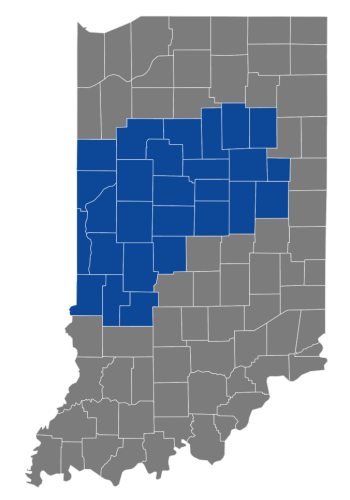
- Fairmount Door has serviced Indiana commercial doors for over 50 years and sees the same lock failures repeat across sectors.
Why this matters
A sectional or rolling steel door with a weak lock is the easiest entry point on a commercial building, easier than a window and often easier than the front door. Break-in attempts on overhead doors usually target the lock mechanism itself, not the panel, because prying a slide bolt out of a track takes less effort than cutting steel.
The fix isn't always a new door. Most of the time it's a garage door security upgrade on the existing door: a better slide lock, a motor-operated lock tied to the opener, or a crossbar on a door that stores inventory worth protecting. Fairmount Door has installed and repaired these systems on Indiana commercial buildings for over 50 years, and the failure pattern is consistent: the lock, not the door panel, is where break-ins succeed.
Getting this right in 2026 means matching the lock type to the door type and the risk level, not defaulting to whatever came standard from the manufacturer.
How this list is ranked
Each system below is ranked on three factors: resistance to forced entry, compatibility with common commercial door types (sectional steel, rolling steel, high-lift), and real-world maintenance burden based on field service patterns. Systems that require constant adjustment or fail in cold weather rank lower even if they look secure on a spec sheet. Verdicts reflect what holds up in daily commercial use, not lab conditions.
The ranked list
1. Slide bolt locks with reinforced tracks
The standard on most sectional commercial doors, a slide bolt drives a bar into the track to stop the door from lifting. On its own it's a deterrent, not a barrier — a pry bar defeats a stock slide bolt in seconds. Reinforcing the track with a steel gusset plate and pairing it with a hardened bolt closes that gap for a fraction of the cost of a new lock system.
Good for low-traffic storage doors where budget matters more than insurance requirements. Verdict: Consider — fine as a baseline, weak as a standalone solution on a door facing the street.
2. Rolling steel door slide locks with UL 437 cylinder cores
Rolling steel doors use a different lock geometry than sectional doors: a slide bolt on the guide rail paired with a cylinder core. Upgrading that core to a UL 437-rated cylinder — the standard for pick-resistant, drill-resistant commercial cylinders — closes the most common bypass method on rolling doors.
This pairs well with the rolling steel doors for high-security buildings most manufacturing and self-storage sites already run, since the door and lock share a rated slat gauge (typically 20 to 24-gauge steel). Verdict: Buy for any rolling steel application handling inventory, cash, or restricted equipment.
3. Motor-operated locks (MOL) tied to the opener
A motor-operated lock throws a bolt automatically when the opener cycles closed, removing the human error of forgetting to manually lock the door. It's the system most commercial insurers ask about first because it eliminates the "door closed but not locked" gap that shows up in nearly every break-in report Fairmount Door reviews on service calls.
Installation requires an opener rated for the door's cycle count, so this only works cleanly on doors already running a commercial-grade operator. Verdict: Buy for any door that cycles more than a few times a day and needs a lock that doesn't depend on someone remembering to use it.
4. Floor-anchored security crossbars
A horizontal steel bar anchored into the floor slab on both sides of the door, independent of the door's own hardware. This is the system to add on top of a lock, not instead of one, for doors protecting high-value inventory or serving as a secondary entry that's rarely watched.
Installing one on a door that already has a solid MOL or UL 437 slide lock is overkill for most buildings. Verdict: Consider — reserve it for the doors where a break-in would be catastrophic, not every door on the property.
5. Chain-and-padlock combinations
Cheap, portable, and still common on older rolling steel doors and outbuildings. A hardened padlock rated for outdoor use with a shrouded shackle resists bolt cutters better than a standard padlock, but the chain link itself is usually the weak point, not the lock.
This is a stopgap, not a system. It works for seasonal storage or temporary sites but doesn't belong on a door protecting a working business in 2026. Verdict: Skip for permanent commercial installations — the cost difference versus a proper slide lock is small.
6. Smart access control tied to remote monitoring
Cloud-connected locks that log every open and close event and let a manager grant or revoke access remotely. These pair with smart garage door openers already deployed for multi-location businesses, and the access log alone becomes useful evidence after an incident.
The tradeoff is dependency on internet connectivity and a subscription for the monitoring platform. Verdict: Buy for multi-door or multi-location operations where a manager isn't on-site to check locks manually; Wait if the building only has one or two overhead doors and someone locks up every night anyway.
7. Interior slide locks on glass-panel doors
Glass-panel overhead doors used on storefronts and showrooms need a lock that doesn't rely on the glass panel for structural resistance. An interior slide lock mounted on the steel frame section, away from the glass, keeps the lock point away from the door's weakest material.
Skipping this and relying on the opener alone leaves glass-panel doors exposed, since glass breaks faster than steel bends. Verdict: Buy for any glass-panel commercial door, Skip relying on opener force alone as the only security layer.
Get a door security assessment
Find out which lock system fits your overhead door before you buy hardware.
Comparison table
| System | Best For | Forced-Entry Resistance | Verdict |
|---|---|---|---|
| Slide bolt (reinforced) | Low-traffic storage doors | Moderate | Consider |
| Rolling steel slide lock, UL 437 core | Rolling steel, storage, manufacturing | High | Buy |
| Motor-operated lock (MOL) | High-cycle doors with commercial openers | High | Buy |
| Floor-anchored crossbar | High-value inventory doors | High | Consider |
| Chain and padlock | Seasonal or temporary sites | Low | Skip |
| Smart access control | Multi-door, multi-location sites | High | Buy |
| Interior slide lock (glass-panel) | Storefront and showroom doors | Moderate-High | Buy |
Where to buy
- Match the lock to the door manufacturer's hardware spec first. A UL 437 cylinder or MOL kit built for the wrong door geometry either won't mount cleanly or won't engage the full bolt throw — ANSI/BHMA Grade 1 hardware specifies a minimum 1-inch bolt throw for a reason.
- Buy from an installer who services what they sell. Hardware bought online with no local support means a DIY install on a door carrying real weight and tension, and a callback nobody answers when it fails.
- Bundle the lock upgrade with a service contract. Locks that don't get lubricated or realigned seize up faster than the door itself; a maintenance contract for overhead doors catches a sticking lock before it becomes a jammed door at 6 a.m.
FAQ
What’s the best commercial overhead door lock system in 2026?
A rolling steel slide lock with a UL 437-rated cylinder or a motor-operated lock tied to a commercial opener rank highest for 2026 installs. Both close the human-error gap that basic slide bolts leave open.
Are slide bolt locks enough for a warehouse door?
A standard slide bolt is a deterrent, not a real barrier, since a pry bar can defeat it quickly. Reinforcing the track or upgrading to a UL 437 cylinder closes that gap for most warehouse applications.
Is a rolling steel door more secure than a sectional door?
Rolling steel doors generally resist forced entry better because of their slat construction, but the lock still determines the actual security level. A sectional door with a motor-operated lock can outperform a rolling steel door with a weak cylinder.
Do smart locks work with existing garage door openers?
Smart access control systems typically require a compatible commercial-grade opener to integrate the lock function. Older openers usually need an upgrade before a smart lock can be added.
How often should commercial door locks be serviced?
High-cycle commercial doors need lock and hardware inspection at every scheduled maintenance visit, since a lock that binds gets forced open by staff and fails faster. A maintenance contract keeps this on a set schedule instead of reacting after a failure.
What is UL 437 and does it matter for garage doors?
UL 437 is the Underwriters Laboratories standard for pick-resistant and drill-resistant cylinder locks. It matters on rolling steel and cylinder-based overhead door locks because it verifies the core resists common bypass tools.
Can insurance require specific lock types on commercial doors?
Commercial property insurers sometimes require a minimum lock grade or a motor-operated lock as a condition of coverage on high-value inventory buildings. Check the policy language before assuming any lock upgrade qualifies.
Is a floor-anchored crossbar necessary if the door already has a good lock?
A crossbar is a second layer, not a replacement, and it’s worth adding on doors protecting inventory that would be catastrophic to lose. Most doors with a solid UL 437 lock or motor-operated lock don’t need one.
One last thing
The lock people upgrade least often is the one on the side door or man-door next to the overhead door, and that's the entry point break-ins actually use most on commercial sites. A rolling steel door with a UL 437 core does nothing if the adjacent man-door still has a builder-grade knob lock from the original construction.
Related guides
- Best smart garage door openers for remote monitoring
- How to set up a maintenance contract for overhead doors
- Best commercial overhead doors for warehouses