Truck stops run overhead doors harder than almost any other commercial building type — fuel islands, service bays, and tire shops open and close doors dozens of times a shift, not dozens of times a year. This guide breaks down what overhead door installation for truck stops actually requires, which door and hardware systems hold up, and which ones fail inside the first year.
- Overhead door installation for truck stops needs high-cycle rolling steel doors rated well past 100,000 cycles — Buy.
- Skip standard residential-grade doors; truck stop bays run 20-40 cycles a day, not per year.
- Insulated rolling steel curtains plus dock seals cut draft loss at fuel islands and freight bays — Buy.
- Battery backup matters most for 24-hour truck stops; daytime-only sites can Skip it.
Why This Matters
A truck stop overhead door isn't a residential door in a bigger frame. Service bays, quick-lube lanes, and tire shops cycle doors all day, every day, on trucks that stand 13 feet 6 inches tall and weigh tens of thousands of pounds. Get the door spec wrong and you're paying for repair calls and lost bay time by month three, not year three.
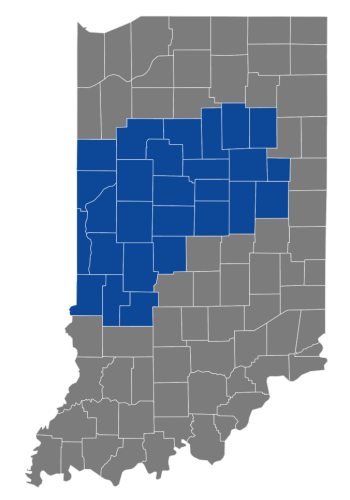
Fairmount Door has installed and repaired commercial overhead doors across Indiana for over 50 years, and truck stop and travel center jobs follow a different playbook than a strip mall or an auto shop.
Who This Is For
This is for truck stop owners, travel center facility managers, and fleet maintenance operators planning a new bay, a fuel island rebuild, or a replacement after a door failure. If you're running service bays, tire shops, or quick-lube lanes that see semi-trucks and box trailers all day, the specs below apply directly.
If you're speccing a single passenger-vehicle bay attached to a convenience store, you need less door than this guide covers — check commercial overhead doors for warehouses for a lighter-duty starting point instead.
What to Look for in Overhead Door Installation for Truck Stops
Clearance for Full-Size Trailers
Most truck stop bays need to clear a fully loaded semi-trailer, and legal trailer height in most states tops out at 13 feet 6 inches. Undersize the opening and you'll turn away the exact trucks your bay was built to service. Measure the tallest vehicle you expect and add clearance for roof-mounted equipment like refrigeration units or exhaust stacks.
Cycle Rating, Not Just Door Size
A door rated for a garage door's typical 1,500 cycles a year won't survive a service bay that opens 20 to 40 times a shift. Commercial-grade rolling steel and sectional doors built for high-cycle use carry springs and hardware rated for 100,000 cycles or more in 2026 product lines. Ask for the cycle rating in writing before you sign — it's the single biggest predictor of how many service calls you'll get in year two.
Insulation for Bay Temperature Control
Indiana winters push heating costs up fast in any bay that opens dozens of times a day. Insulated steel curtains and panels hold bay temperature between openings, which matters most on lube bays and tire shops where techs work inside for 20 minutes or more at a stretch. Uninsulated doors cost less up front and more every February after that.
Impact Resistance and After-Hours Security
Truck stop bays store tools, tires, and diagnostic equipment worth more than most residential garages combined. Look for reinforced bottom panels and a curtain gauge heavy enough to resist forced entry, not just a door that closes and locks. A door that dents on the first forklift bump isn't a security door — it's a liability.
Safety Sensor Compliance
Federal requirements under UL 325 mandate photo-eye reversing sensors on commercial door operators, and that requirement doesn't get waived for high-traffic bays. Skipping or disabling sensors to speed up cycle time is the fastest way to turn a minor door issue into a lawsuit. Every quote for truck stop door installation should list sensor placement as a line item, not an afterthought.
Backup Power for Round-the-Clock Sites
A truck stop running fuel islands and service bays 24 hours a day can't afford a door that's dead the moment the power blinks. Battery backup or a generator transfer switch keeps doors operational through an outage instead of stranding a trailer half in, half out of the bay. Daytime-only locations can skip this and put the budget toward insulation or hardware instead.
Top Picks for Truck Stop Overhead Doors
Insulated Rolling Steel Doors — the workhorse pick
Rolling steel curtain doors built from 20- to 24-gauge galvanized steel are the standard for truck stop service bays because they take repeated impact and heavy cycling without warping. Commercial-grade curtains carry cycle ratings well past the 1,500-cycle-per-year mark that sinks residential doors, and insulated versions hold bay temperature through Indiana winters. See the full breakdown on rolling steel doors for high-security buildings before you spec a bay.
Verdict: Buy for any bay running more than a dozen cycles a day.
Heavy-Duty Track and Hardware — the part nobody budgets for
A commercial-grade door on a light-duty track is still a light-duty install — the track and rollers wear out long before the curtain does on a bay that opens 20 or more times a shift. Continuous-duty operators and reinforced track systems are built for that cycle count in a way standard torsion hardware isn't.
Verdict: Buy — this is not the line item to cut to save on the quote.
Dock Seals and Shelters — the fuel bill fix
Foam-filled dock seals compress against a trailer at the loading point and block the draft that runs a bay's heating bill up all winter. They matter most at truck stops with a freight or parts-receiving bay separate from the customer service bays. See dock seals and shelters for loading docks for sizing by trailer type.
Verdict: Consider for sites with a dedicated freight bay, Skip if every bay is customer-facing service only.
Photo-Eye Safety Sensors — the non-negotiable
Infrared reversing sensors mounted low on each side of the door frame stop the door and reverse it if anything breaks the beam while closing. This isn't an upsell — it's required under UL 325 for commercial operators, and every quote for a truck stop bay should list sensor placement by name.
Verdict: Buy — every time, no exceptions.
Battery Backup Power Systems — the 2 a.m. insurance policy
A battery backup keeps the door operator running through a grid outage so a trailer doesn't get stuck half-open at 2 a.m. on a fuel island that never closes. Sites running bays and pumps around the clock lose more in stranded trucks and liability than the backup system costs to install.
Verdict: Buy for 24-hour sites, Skip for locations that close overnight.
Get a Quote for Truck Stop Door Installation
Fairmount Door has installed commercial overhead doors across Indiana for over 50 years.
What to Avoid
Residential-Grade Doors Sold as 'Commercial'
Some suppliers relabel a beefed-up residential door as commercial-grade. Check the cycle rating, not the marketing copy — if it doesn't list a number past 1,500 cycles a year, it's a residential door in different packaging.
Uninsulated Doors in a Cold-Climate State
Indiana winters make an uninsulated bay door expensive every month from November through March. The upfront savings on an uninsulated curtain disappear inside two heating seasons on a bay that opens all day.
Skipping Photo-Eye Sensors to Cut Install Cost
Disabling or omitting reversing sensors to shave time or cost off an install violates UL 325 and puts the business on the hook if anyone gets hurt. It's not a corner worth cutting on a door that cycles dozens of times a day.
Verdict Comparison Table
| Door/System | Best For | Key Spec | 2026 Verdict |
|---|---|---|---|
| Insulated rolling steel doors | High-cycle service bays | 20-24 gauge steel, cycle-rated | Buy |
| Heavy-duty track and hardware | Bays running 20+ cycles/day | Continuous-duty operator | Buy |
| Dock seals and shelters | Dedicated freight bays | Foam-filled compression seal | Consider |
| Photo-eye safety sensors | Every commercial bay | UL 325 compliant | Buy |
| Battery backup power | 24-hour truck stops | Transfer switch or battery unit | Buy for 24hr sites |
FAQ
What’s the best overhead door for a truck stop service bay?
Insulated rolling steel doors rated for high-cycle use are the best fit for truck stop service bays in 2026. They hold up against the 20 to 40 daily cycles a busy bay runs, and insulated panels hold bay temperature through winter.
How much does overhead door installation cost for a truck stop?
Cost depends on door size, insulation level, and hardware — a high-cycle bay costs more than a standard residential door because of the heavier steel gauge and continuous-duty operator. Get a site-specific quote rather than pricing off a size chart alone.
How many cycles should a truck stop overhead door handle per day?
A busy truck stop service bay can cycle a door 20 to 40 times a shift, far past the roughly 1,500 cycles a year a typical residential door is built for. Ask for the manufacturer’s cycle rating in writing before installation.
Is insulation worth it for truck stop overhead doors?
Yes, insulated doors are worth it for any bay that opens dozens of times a day in a cold-climate state like Indiana. The insulation holds bay temperature between openings, cutting heating costs on lube bays and tire shops where techs work inside for extended periods.
Do truck stop overhead doors need photo-eye sensors?
Yes, photo-eye reversing sensors are required under UL 325 for commercial door operators, with no exception for high-traffic bays. Skipping them to speed up install time creates liability exposure the first time something gets caught in the door path.
What clearance do truck stops need for trailer height?
Truck stop bays should clear at least 13 feet 6 inches, the standard legal trailer height limit in most states. Add extra clearance for roof-mounted refrigeration units or exhaust stacks on the trucks the bay actually services.
Can a truck stop overhead door run during a power outage?
Yes, with a battery backup unit or a generator transfer switch installed on the door operator. This matters most for truck stops running fuel islands or service bays around the clock, since a dead door mid-cycle can strand a trailer in the opening.
How often should a commercial overhead door at a truck stop get inspected?
A high-cycle commercial door at a truck stop should get inspected at least twice a year given the volume of daily use, with more frequent checks on springs, tracks, and sensors before winter. A maintenance contract covers this on a set schedule instead of waiting for a failure call.
One Last Thing
The detail most truck stop owners miss: the door spec sheet almost never lists cycle rating up front — you have to ask for it. A door quoted on size and price alone with no cycle number attached is a residential door wearing a commercial price tag, and it'll show up as a service call inside the first year, not the fifth.
Related Guides