If your garage door opener is older than your car, chances are the clicker in your visor died years ago and you're stuck guessing what actually pairs with it. This guide ranks the remote and keypad types that work with older garage door openers in 2026, based on frequency compatibility and the repair calls Fairmount Door sees across Indiana.
- Universal rolling-code remotes are the best garage door remotes for older openers built after 1993 — buy.
- Fixed dip-switch remotes still work on pre-1993 openers, but only use them if no rolling-code option fits.
- Rolling-code keypads beat fixed-code keypads on security — most lockout calls trace back to old fixed-code units.
- Openers older than 25-30 years often reject every aftermarket remote — replacement beats patching at that point.
Why this matters
A remote that doesn't match your opener's code type won't just fail to pair — it can leave the door unresponsive or, with a fixed-code unit, easier for a $20 code-grabber to clone. Homeowners with openers from the 1980s and 1990s are the group most likely to buy the wrong remote, because the packaging rarely says which code standard it uses.
Getting this right in 2026 means matching three things: the frequency band your motor unit broadcasts on, whether it runs fixed or rolling code, and how many years of service life the opener has left before a remote purchase stops making sense. Fairmount Door technicians walk into this exact mismatch on service calls regularly — a homeowner buys a universal remote, it won't program, and the real issue is an opener manufactured before rolling code existed.
How we ranked
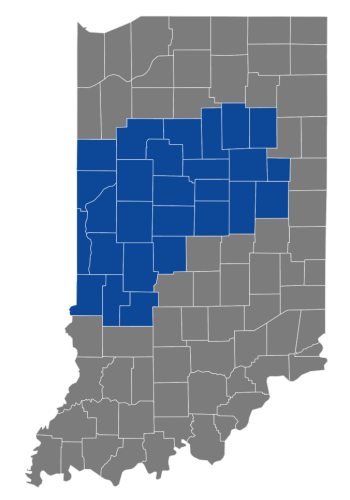
Each entry below is ranked on frequency and code-type compatibility as published by opener manufacturers, cross-checked against the failure patterns Fairmount Door technicians see on remote and keypad calls across Indiana, where the company has worked on garage doors for over 50 years. Security level reflects whether the code changes per use (rolling) or stays static (fixed) — that single distinction predicts most of the lockouts and break-in attempts tied to garage door remotes.
No pricing is included here because remote and keypad pricing shifts by brand and retailer; check current listings before you buy. What doesn't shift is compatibility, and that's what this list ranks on.
The ranked list
1. Universal rolling-code remote — the safe pick
Most openers built after 1993 broadcast on the 300-392 MHz band using rolling code, where the transmitted code changes every time you press the button. A universal rolling-code remote scans that band during a learn-mode pairing sequence and locks onto your opener's specific code, which is why these work across Chamberlain, LiftMaster, Genie, and Craftsman motor units from the past three decades. If you're not sure how to pair one, the program a new garage door remote or keypad steps cover the learn-button sequence for most brands. Verdict: Buy.
2. OEM manufacturer replacement remote — the exact match
Buying the remote made by your opener's original manufacturer guarantees frequency and code-type compatibility without any guesswork on your end. The tradeoff is availability — OEM remotes for openers manufactured before the late 1990s are harder to find new, and you're often shopping used or refurbished stock. When you can confirm the exact model number on your motor unit's label, this is the lowest-risk purchase. Verdict: Buy.
3. Universal rolling-code keypad — the convenience upgrade
A rolling-code keypad mounted outside the garage gives you keyless entry without carrying a fob, and it pairs the same way a rolling-code remote does — through the opener's learn button. This matters more than it sounds like for older openers, because a keypad eliminates the single point of failure that comes with a clip-on remote getting lost or its battery dying at the worst time. Verdict: Buy.
4. Fixed dip-switch remote — the last resort for pre-1993 openers
Openers manufactured before rolling code became standard use a bank of 8 to 12 physical dip switches inside the remote and receiver, both set to match a static code. These remotes still work, but the code never changes, which means anyone with a code-grabbing scanner near your driveway can copy it in seconds. Only buy this type if your opener's receiver genuinely has no rolling-code compatibility — check the motor unit label before assuming. Verdict: Consider, only if rolling code isn't an option.
5. Smart opener retrofit — the wildcard
Some openers built in the 1980s or earlier won't reliably pair with any aftermarket remote, fixed or rolling code, because the receiver hardware has degraded past the point of clean signal capture. At that point a smart garage door opener replacement solves the remote problem entirely by adding app-based control alongside a physical remote. This is a bigger purchase than a $30 clicker, so it only makes sense once you've ruled out simpler fixes. Verdict: Consider if remotes keep failing, otherwise Wait.
6. Off-brand knockoff remote — the one to skip
No-name remotes sold without a stated frequency range or code type are a coin flip on your driveway. Technicians see these fail to hold pairing after a few weeks, or work intermittently in cold weather when older receivers are already marginal. Skip anything that doesn't list its frequency band or code type on the packaging. Verdict: Skip.
Not sure what your opener supports?
Get a technician to check compatibility before you buy the wrong remote.
Comparison table
| Type | Works With | Security Level | Verdict |
|---|---|---|---|
| Universal rolling-code remote | Openers built after ~1993, 300-392 MHz | High — code changes per use | Buy |
| OEM manufacturer remote | Exact match to your opener's model | High on rolling-code models | Buy |
| Universal rolling-code keypad | Same rolling-code openers | High | Buy |
| Fixed dip-switch remote | Pre-1993 openers, 8-12 switch bank | Low — static code | Consider |
| Smart opener retrofit | Openers with failing or no receiver | High plus app control | Consider/Wait |
| Off-brand knockoff | Unclear, unlisted specs | Unknown | Skip |
Where to buy
- Match the label first. Open the opener's motor unit cover and photograph the model number before you shop — sellers and manufacturer support lines both ask for it.
- Buy from the opener's manufacturer or an authorized dealer when the opener is under 15 years old. Third-party universal remotes work, but OEM stock guarantees the code type matches without a return trip.
- Skip marketplace listings with no stated frequency or code type. If the listing doesn't say rolling code or fixed code, assume it's a gamble and move on.
What to avoid
A remote that "fits most openers" on the packaging with no frequency number listed is the most common wrong purchase homeowners make. Two other traps show up often: buying a fixed-code remote because it was cheaper, without knowing your opener already supports rolling code (a downgrade in security you didn't need), and assuming a dead remote means a dead receiver — when the real fix is reprogramming, covered in the garage door won't open with the remote guide, not a new purchase.
If security is the real concern behind the upgrade, pair the remote decision with a look at garage door security upgrades — a rolling-code remote alone doesn't close every gap an older system has.
FAQ
What’s the best garage door remote for an older opener?
A universal rolling-code remote is the best choice for most openers built after 1993, since it matches the 300-392 MHz band and rolling-code standard those motor units use. For openers built before 1993, a fixed dip-switch remote is often the only compatible option.
Will a universal remote work with any garage door opener?
No — universal remotes only work if your opener’s receiver supports the same frequency band and code type the remote transmits. Openers manufactured before the early 1990s frequently use fixed dip-switch codes that some universal remotes can’t replicate.
How do I know if my opener uses rolling code or fixed code?
Check the receiver unit on the motor for a bank of small physical switches — that indicates fixed dip-switch code. A learn button with no visible switches usually means rolling code, standard on most openers built after 1993.
Is a keypad more secure than a remote?
A rolling-code keypad is just as secure as a rolling-code remote, since both change their transmitted code every use. A fixed-code keypad or remote is the weaker link regardless of form factor.
Can a smart opener replace a physical remote entirely?
Most smart openers still include a physical remote alongside app control, so you’re not required to give up the clicker. In 2026, app-based control is an addition to remote access, not a full replacement for most households.
What if no remote or keypad works with my opener?
If the receiver hardware has degraded to the point that no remote pairs reliably, replacing the opener resolves the problem faster than continuing to test remotes. This is more common on openers past 25 to 30 years of service.
Do garage door remotes expire?
Remotes themselves don’t expire, but batteries do, and a dead battery is the most common reason a working remote suddenly stops responding. Reprogramming rarely fixes a battery problem — replace the battery first.
How much does a garage door remote cost in 2026?
Pricing varies by remote type, brand, and retailer, so check current listings before buying. OEM remotes typically cost more than universal rolling-code options, while fixed-code remotes for legacy openers are the least predictable to price.
One last thing
The detail most homeowners skip: the receiver inside your opener's motor unit has its own limited memory for paired remotes, and on older units that memory can fill up or corrupt after years of use — which looks identical to "the new remote won't program" but has nothing to do with the remote itself. If a brand-new rolling-code remote refuses to pair on the first few attempts, that's the receiver to check before buying a second remote.
Related guides