Booking a wedding, a trade show, and a corporate gala in the same weekend means your loading door has to open on command every time — no callbacks, no delays. Overhead door installation for event venues has to balance wide vehicle access, insulation, fire code, and noise control in one purchase.
- Insulated steel sectional doors with an R-13 to R-18 rating cut HVAC swings during multi-hour events — Buy.
- Full-view aluminum glass doors open venues to patios and courtyards but skip fire-rated zones near kitchens.
- Fire-rated overhead doors rated at 90 minutes or 3 hours are non-negotiable next to commercial kitchens and generators.
- Sound-dampened commercial overhead doors keep load-in noise from bleeding into ceremony or conference space.
- Fairmount Door installs and services all five door types covered here for event venues and banquet halls.
Why this matters
An event venue's overhead door isn't a garage door with a bigger motor. It's the path for catering vans, staging trucks, band equipment, and folding tables — often multiple times in a single day, sometimes at 6 a.m. and again at 11 p.m. If it sticks, an entire event timeline stalls in front of guests.
Venues that already run banquet halls know the difference between a door that survives daily cycling and one that fails during a Saturday wedding. Overhead door repair for event venues and banquet halls covers the fixes; this guide covers what to buy before you're calling for one.
Who this is for
This guide is written for venue owners, event coordinators, and facility managers running banquet halls, wedding barns, conference centers, and multi-use event spaces. If your building sees regular vehicle load-in, needs indoor-outdoor flow for patio events, or shares a wall with a commercial kitchen, the door decisions below apply directly to your building.
What to look for in overhead door installation for event venues
Clear opening height and width
Event venues load in staging trailers, box trucks, and oversized furniture on a schedule that can't slip. A door opening under 12 feet wide turns a 20-minute load-in into an hour of repositioning. Measure your largest recurring vendor vehicle before you settle on a door size, not your smallest.
Insulation rating
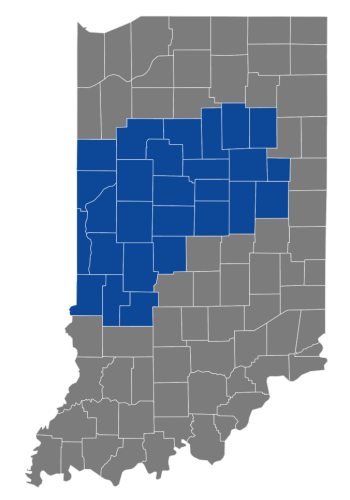
A banquet hall running HVAC for 200 guests loses that battle fast if the loading door has no insulation. Steel sectional doors in the R-9 to R-18 range hold temperature during repeated openings for vendor access, which matters most in Indiana winters and summers alike.
Fire code compliance
Any overhead door adjacent to a commercial kitchen, generator room, or fire-rated corridor needs a door rated to match — typically 90 minutes to 3 hours under UL 10B/10C. Skipping this isn't a style choice; it's an inspection failure waiting to happen.
Sound control
A loading dock 40 feet from a ceremony space or keynote stage needs a door that doesn't transmit a delivery truck's diesel engine or a forklift's beeping straight into the room. Sound-dampened panel cores and tight perimeter seals are the difference between guests noticing and guests not noticing.
Security and after-hours access
Venues store rented chairs, AV equipment, and catering supplies worth tens of thousands of dollars between events. A door with a weak lock or no security bar is an open invitation, especially at venues that sit empty on weekdays.
Top picks for event venue overhead doors
Insulated steel sectional door — the safe pick. These run R-13 to R-18 depending on panel thickness and are the standard choice for loading bays adjacent to kitchens or HVAC-sensitive event floors. Buy for any venue running climate control during multi-hour bookings — see current insulation ratings for efficiency before you spec panel thickness.
Full-view aluminum glass door — the showpiece pick. These open a banquet hall to a courtyard or patio and read as an architectural feature rather than a loading door. The tradeoff is insulation value, which drops well below a steel sectional. Consider for patio-facing walls, Skip for any opening near a commercial kitchen or fire-rated corridor.
Fire-rated overhead door — the code pick. Rated at 90 minutes or 3 hours depending on adjacency requirements, these are mandatory next to kitchens, generator rooms, and certain occupancy separations. Buy wherever your fire marshal requires it — check fire-rated overhead doors for commercial buildings before ordering, since the wrong rating means a failed inspection and a reorder.
Sound-dampened commercial door — the quiet pick. Built with a denser core and tighter perimeter seals than a standard steel door, this cuts the noise transfer from loading docks into event space. Buy for any venue with a dock within 50 feet of a ceremony room or stage — the approach is detailed in how to soundproof a commercial overhead door.
Rolling steel security door — the storage pick. Higher gauge steel and a slat curtain design resist forced entry better than a standard sectional door, which matters for equipment storage rooms that sit unattended between bookings. Buy for high-value storage bays, Skip for the main event-floor loading door where you want faster daily cycling, not maximum resistance.
What to avoid
- A residential-grade door on a commercial opening. It looks similar in a showroom photo, but it isn't built for the cycle count a venue puts on a loading door — dozens of open-close cycles a week versus a few a day at a house.
- No fire rating near kitchen or generator walls. This one gets caught at inspection, not before, and the reorder plus install delay can push back an opening date by weeks.
- Skipping backup power on the main load-in door. A power outage during a booked event with no way to open the door manually turns a minor inconvenience into a stalled event — see backup power systems for commercial overhead doors if your venue runs on a tight event calendar.
Verdict comparison
| Door type | Best for | Key spec | Verdict |
|---|---|---|---|
| Insulated steel sectional | Kitchen-adjacent loading bays | R-13 to R-18 | Buy |
| Full-view aluminum glass | Patio and courtyard walls | Low insulation value | Consider |
| Fire-rated overhead door | Kitchen and generator adjacency | 90 min to 3 hr rated | Buy |
| Sound-dampened commercial door | Docks near ceremony/stage space | Dense core, tight seals | Buy |
| Rolling steel security door | Equipment storage rooms | Heavier gauge steel | Consider |
Plan your venue door installation
Get a spec and quote before your next event date is locked in.
FAQ
What’s the best overhead door for an event venue?
An insulated steel sectional door rated R-13 to R-18 is the standard pick for loading bays at event venues in 2026, since it holds HVAC temperature through repeated vendor access. Kitchen-adjacent openings need a fire-rated door on top of that, regardless of insulation preference.
Is a glass overhead door practical for a banquet hall?
A full-view aluminum glass door works well on patio-facing walls where indoor-outdoor flow matters more than insulation. It’s a weaker choice for loading bays near kitchens, where fire code and temperature control take priority.
How much does commercial overhead door installation cost for a venue?
Cost depends on door size, insulation level, and fire rating requirements, so get a site-specific quote rather than a flat number. A rough budgeting framework is covered in how to budget for garage door repair and replacement costs.
Do event venue loading doors need a fire rating?
Any door adjacent to a commercial kitchen, generator room, or certain fire-rated corridors needs a UL 10B/10C rated door, typically 90 minutes to 3 hours. Your local fire marshal’s inspection determines the exact requirement for your building.
How do you soundproof a loading dock near an event space?
A sound-dampened commercial overhead door with a denser core and tighter perimeter seals cuts most of the noise transfer from a loading dock into event space. Door placement relative to the ceremony or stage area also affects how much sound control you actually need.
What size overhead door do event venues need?
Most venues need a clear opening of 10 to 20 feet wide to accommodate catering trucks and staging trailers without repositioning. Measure your largest recurring vendor vehicle before finalizing the opening size, not an average or a guess.
Should a venue have backup power on its overhead door?
Yes, any venue running a tight event calendar should have a backup power option or manual override on its main loading door. A power outage during a booked event with no way to open the door stalls the entire event, not just the door.
How often should a venue overhead door get serviced?
A door cycling multiple times a day for event load-in needs more frequent service than a residential garage door, typically on a set maintenance contract rather than as-needed calls. Setting up a recurring schedule catches wear before it causes a mid-event failure.
One last thing
The door that fails during a booked event is almost never the one that looked cheap on the quote — it's the door with the right specs installed against the wrong wall, like an insulated sectional door with no fire rating six feet from a kitchen pass-through. Match the door to the wall it's going on before you match it to the budget, and the install holds up through a full 2026 event calendar without a mid-season callback.
Related guides