Severe weather doesn't wait for you to get around to garage door maintenance — a 60 mph gust or a foot of standing water in the driveway will find every weak point in your setup in about ten seconds. Garage door storm preparation in 2026 comes down to five things: hardware, seals, bracing, power backup, and a track that isn't already loose.
- Garage door storm preparation starts with reinforcing the largest opening in your home before wind hits.
- Replace worn weatherstripping and bottom seals before storm season to block wind-driven rain and debris.
- Test your opener’s manual release and battery backup now, not during a power outage.
- A door stuck off its track after high wind needs professional realignment, not DIY force.
- A brace kit and fresh seals cost far less than one flooded or blown-in garage.
Why this matters
Your garage door is the largest moving opening in your home, and it's usually the least wind-rated part of the exterior. When it fails in a storm, the pressure change inside the garage can push up on the roof from underneath, which is how a bad storm turns into a roof claim instead of a door claim.
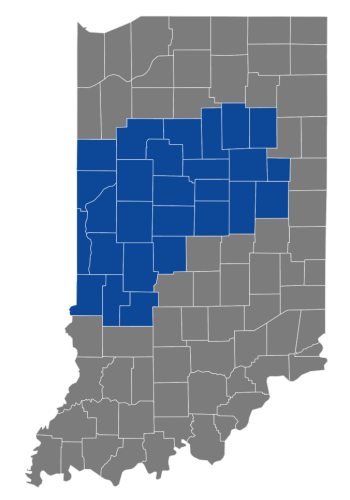
Homeowners across Indiana and the wider Midwest see this every storm season — high wind warnings, sideways rain, sometimes hail that dents panels and jams tracks. A door that's properly braced, sealed, and mechanically sound in 2026 holds up. One that hasn't been touched since installation usually doesn't.
What you'll need
- A cordless drill or ratchet with a socket set, for tightening track bolts and hinges
- A tape measure, to check gaps at the bottom seal and side jambs
- Silicone-based garage door lubricant (not WD-40, which attracts grit)
- A flashlight, for inspecting the top of the tracks where debris collects
- A bracing kit rated for your door's width, if your door doesn't already have one
- 15-20 minutes for the inspection pass, longer if you're replacing seals
If your weatherstripping is cracked or flattened, this is also the point where you'd order a replacement kit — check the weatherstripping options for drafty garages before storm season, not after the first leak shows up on the garage floor.
The steps
1. Inspect every hinge, track bolt, and roller bracket
A loose bracket is the first thing that gives during sustained wind load. Walk the door with your drill and snug every visible bolt — tracks, hinges, and the bottom bracket where the cable attaches. Expect to find at least two or three loose fasteners on a door that's five years old or more.
Common mistake: over-tightening the hinges so the panels can't flex slightly under wind pressure, which cracks the panel instead of absorbing the load.
2. Replace worn weatherstripping and bottom seals
The bottom seal and side weatherstripping are your only defense against wind-driven rain getting under and around the door. If the bottom seal is cracked, flattened, or gapping more than a quarter inch off the floor, water and debris get in during the first heavy storm. Replacing the bottom seal for water and pest protection takes about 20 minutes with a channel-style seal and a utility knife.
Expected outcome: a continuous seal line with no daylight visible from inside the garage when the door is closed.
3. Add or check a bracing kit
If your garage door isn't wind-rated, a horizontal bracing kit bolted to the inside of the panels adds real resistance against wind pressure and impact debris. This matters most for doors wider than 9 feet, which flex more under load than a standard single-car door. Check that any existing brace is still bolted tight — braces loosen the same way hinges do.
Common mistake: assuming a brace kit installed years ago is still doing its job without a physical check.
4. Clear the tracks and lubricate the rollers
Debris in the tracks — leaves, gravel, wasp nests — causes the door to bind under the extra stress of high wind, which is exactly when you don't want binding. Wipe both tracks down and apply silicone lubricant to the rollers and hinges. A door that moves smoothly on a calm day moves smoothly under storm stress too.
Expected outcome: the door opens and closes without jerking or grinding at any point in the travel.
5. Test the manual release and confirm battery backup
If the power drops mid-storm, you need to know the manual release cord actually disengages the opener and lets you lift the door by hand. Pull the red release handle and lift the door a foot to confirm it's not seized. Then check the opener's battery backup — most units built after 2020 include one, but the battery itself degrades and needs replacing every few years. Knowing how to reset a garage door opener after a power outage before the outage happens saves you a frustrating 2 a.m. troubleshooting session.
Common mistake: discovering the battery backup is dead only after the power actually goes out.
6. Secure the surroundings
Anything loose near the garage — trash cans, patio furniture, loose gutters — becomes a projectile in high wind and a direct threat to the door panels. Walk a 20-foot radius around the garage and bring in or tie down anything that isn't fixed to the ground.
7. Schedule a professional check before peak storm season
A visual inspection catches loose hardware, but it won't catch spring tension that's degraded or a track that's a few degrees out of alignment. A technician can check both in under 30 minutes, and catching a weak spring before a storm beats replacing a door after one drops.
Get your door storm-ready
Have a technician check hardware, seals, and bracing before the next storm hits.
Troubleshooting
Door won't close all the way after a storm. Usually a bent track or debris caught in the roller path — don't force the opener repeatedly, since that strains the motor and can strip the gear.
Door is stuck off its track after high wind. This needs careful realignment, not a shove. Forcing a door back onto a bent track can pop the roller loose entirely. Look at how to fix a garage door stuck off its track for the safe first steps, and call a technician if the track itself is visibly bent.
Opener won't respond after the power comes back. Most units need a manual reset sequence after an outage, not just a battery reconnect. Check the wall control and the opener's remote sensor for a blinking error light before assuming the unit failed.
Safety sensors trip or flash after storm debris. Wind-blown leaves and dust knock sensors out of alignment more often than people expect, and a misaligned sensor will refuse to let the door close at all.
Water pooling at the bottom of the door after rain. A flattened or gapped bottom seal is almost always the cause — check seal contact at both corners, not just the center.
Panels dented from hail or debris. Cosmetic dents rarely affect function immediately, but a dent near a hinge point can throw off panel alignment over time and is worth a professional look before it worsens.
Tools and resources
- Cordless drill and socket set for hardware checks
- Silicone garage door lubricant
- Replacement weatherstripping and bottom seal kits
- A working flashlight for track inspection
- Backup battery for your opener, if the current one is more than 3 years old
What to do next
Once the door itself is storm-ready, don't skip the sensors — a door that closes fine on a calm day can suddenly refuse to shut once wind and debris throw the beam off. Walk through how to realign garage door safety sensors as your last check before storm season, since a tripped sensor at the worst moment is one of the most common calls technicians get after a big storm rolls through.
FAQ
What is garage door storm preparation and why does it matter in 2026?
Garage door storm preparation means checking hardware, seals, bracing, and opener backup power before severe weather hits, since the garage door is usually the largest and least wind-rated opening on a house. Skipping it in 2026 risks pressure damage to the roof and interior flooding, not just a broken door.
How much does it cost to brace a garage door for storms?
A bracing kit runs from roughly $30 to $100 depending on door width, plus labor if you have it professionally installed. That’s far less than the cost of a flooded garage or a blown-in door panel after a storm.
Can I close my garage door manually during a power outage?
Yes, every standard opener has a manual release cord that disconnects the trolley so you can move the door by hand. Test it before storm season, since a seized release cord is a bad discovery mid-outage.
Is weatherstripping replacement worth it before storm season?
Yes, worn weatherstripping is the main reason wind-driven rain gets into a garage during a storm. A full replacement kit takes about 20 minutes to install and blocks water at the point it usually enters.
How do I know if my garage door track is damaged after a storm?
A door that grinds, jerks, or won’t travel the full path usually has a bent or misaligned track. Don’t force the opener repeatedly; a stuck door needs manual inspection before you try to close it again.
Do garage door openers have battery backup for power outages?
Most openers built after 2020 include a battery backup that keeps the unit working for a limited number of cycles during an outage. Check the battery’s condition each storm season, since a dead backup defeats the purpose.
What causes a garage door to not close all the way after high wind?
A bent track, debris in the roller path, or a misaligned safety sensor are the three most common causes after a storm. Clear visible debris first, then check sensor alignment before assuming the opener itself failed.
Should I hire a professional or handle storm prep myself?
Hardware checks, lubrication, and seal replacement are reasonable DIY tasks. Spring tension, bent tracks, and bracing kit installation on wider doors are worth a professional check, since a mistake there can cause the door to fail under load.
One last thing
Most storm-related garage door failures in 2026 trace back to something that was already loose or worn weeks before the storm hit, not damage from the storm itself. The inspection pass in this guide takes less time than most people spend deciding whether to do it, and it's the difference between a door that holds and a door that doesn't when the wind actually shows up.
Buy: a bracing kit and a fresh weatherstripping set before the next severe weather watch, not after.