A grinding or humming motor that won't budge the door, a garage door opener that runs but never moves the door, or a motor that shuts off mid-cycle all point to the same verdict: the opener motor needs replacing, not just adjusting. The hidden cost homeowners miss is that a failing motor often burns out the circuit board or gears at the same time, so a same-day fix can turn into a full opener swap once a technician opens the housing.
- Grinding noise, stalling mid-cycle, or a motor that runs without moving the door means opener motor replacement, not repair.
- Chain, belt, screw, and direct-drive motors fail differently — belt-drive motors rarely need mid-life replacement, chain-drive motors wear out fastest.
- Opener motors built before 2016 typically lack rolling-code security and battery backup, both reasons to replace rather than repair in 2026.
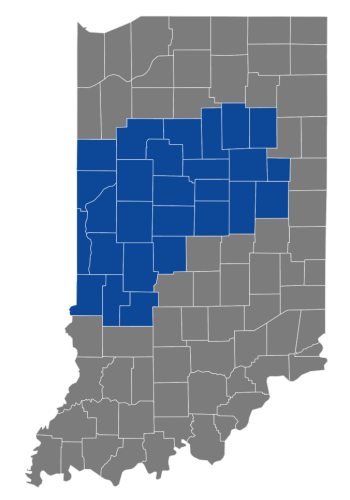
- Searching ‘garage door motor near me’ in Central Indiana turns up dozens of results — ask whether the tech replaces the motor or the whole opener unit.
- Fairmount Door diagnoses motor failure versus a simpler fix like sensor misalignment before recommending replacement.
Why This Matters
A garage door opener motor is not one part — it's a gearbox, a capacitor, a circuit board, and a drive mechanism working together. When one component fails, the motor often masks the real problem: homeowners hear "the motor is dead" when the actual issue is a worn gear or a blown capacitor that's cheaper to fix.
Getting the diagnosis wrong costs money twice: once for the wrong repair, then again for the motor replacement that was needed from the start. Picking the right opener horsepower also matters here — an underpowered motor straining against a heavy door wears out years before a properly sized one would.
How to Tell If a Garage Door Opener Motor Needs Replacing
Run through this list before calling anyone. If two or more apply, the motor is the likely culprit, not the springs, tracks, or sensors.
| Symptom | Likely Cause | Repair or Replace |
|---|---|---|
| Motor hums, door doesn't move | Stripped gear or worn drive mechanism | Replace |
| Door reverses immediately after closing | Safety sensor misalignment (not the motor) | Repair |
| Opener runs louder than usual, grinding sound | Motor bearing or gear failure | Replace |
| Door opens partway, then stalls | Weak capacitor or overheated motor | Replace |
| Remote works but wall button doesn't (or vice versa) | Wiring or logic board issue | Repair |
| Motor won't start at all, no sound | Dead capacitor or burned-out motor | Replace |
If the wall button and remote both stop responding at the same time, check the breaker first — that's a power issue, not a motor issue. The guide on resetting an opener after a power outage walks through that check before you assume the motor failed.
Chain-Drive Motors: The Loudest, Least Durable Option
Chain-drive motors move the door with a metal chain, and that chain wears the drive gear faster than any other type. In garages with daily use, expect chain-drive motors to show gear wear well before belt or direct-drive units reach the same age. Best for: detached garages where noise isn't a concern, heavy doors that need mechanical strength. Verdict: Hold if under 8 years old, replace if grinding starts.
Belt-Drive Motors: Quiet, Longer-Lasting
Belt-drive motors use a rubber-composite belt instead of a chain, which means less metal-on-metal wear and a quieter cycle. They're the standard pick for garages attached to living space or bedrooms above the garage. Best for: attached garages, homes where opener noise reaches indoor living space. Verdict: Buy when replacing a chain-drive unit in an attached garage.
Screw-Drive Motors: Fewer Moving Parts, Temperature-Sensitive
Screw-drive motors move the trolley along a threaded steel rod, which means fewer parts to wear out but more sensitivity to temperature swings — the grease on the rod thickens in cold weather and can slow the motor down. Central Indiana winters put screw-drive motors through more strain than belt-drive units in the same climate. Best for: garages with stable indoor temperatures, buyers who want low maintenance. Verdict: Hold, but grease the rod before winter.
Direct-Drive Motors: The Newest Option, Fewest Failure Points
Direct-drive motors move along a stationary chain while the motor itself travels, cutting failure points down to essentially one moving part. These units, common in openers sold since the early 2020s, tend to run quieter and need less mid-life intervention than older chain or screw designs. Best for: buyers replacing an opener from before 2016 and want the lowest-maintenance option available in 2026. Verdict: Buy if replacing an opener motor from before 2016.
Why Opener Motor Failure Varies
Not every garage door opener motor fails on the same timeline. These factors decide whether a motor lasts 8 years or 20:
- Door weight and gauge — heavier insulated steel doors put more load on the motor with every cycle
- Cycles per day — a garage used four or more times daily wears a motor faster than one used once
- Drive type — chain-drive motors wear faster than belt or direct-drive under the same use
- Climate exposure — unheated garages in Central Indiana winters strain motors more than climate-controlled spaces
- Maintenance history — an opener that's never been lubricated or had its gear checked fails sooner
- Opener age — units built before 2016 generally lack the reinforced gearing found in newer motors
A properly matched drive type matters as much as motor quality. The breakdown on choosing a garage door opener drive type covers which mechanism fits which door weight and garage layout.
“If the motor hums but the door doesn’t move, that’s a gear or capacitor failure — not something a can of oil fixes.”
Related Questions
How long does a garage door opener motor last?
Most opener motors last 10 to 15 years under normal residential use, though chain-drive units on the low end of that range and belt or direct-drive units on the high end. Heavy daily use, extreme temperature swings, and skipped maintenance all shorten that window.
Can I replace a garage door opener motor myself?
Replacing just the motor unit (not the full opener) is possible for someone comfortable with electrical disconnects and drive-mechanism alignment, but misaligning the new motor with the existing rail causes premature failure. Most homeowners end up replacing the whole opener rather than sourcing a matching motor, since matching an exact discontinued model is difficult.
Is it cheaper to replace just the motor or the whole opener?
Replacing the whole opener is usually the more practical route once the motor fails, since a motor-only swap on an opener from before 2016 often means finding a discontinued part. A full opener replacement also resets the warranty clock and adds current safety-reversal standards the old unit may not have.
If the wall button, remote, and keypad all seem unresponsive at once, work through the guide on a garage door that won't open with the remote before assuming motor failure — dead batteries and unprogrammed remotes cause the same symptom.
When homeowners search "garage door motor near me" across Central Indiana, most calls end up being a full opener swap rather than a standalone motor replacement, since matching gear ratios and mounting brackets on an older unit rarely pencils out against a new opener with a current warranty.
Get an opener motor diagnosis
Fairmount Door checks the motor, gears, and wiring before recommending replacement.
FAQ
How do I know if my garage door opener motor is bad?
A bad opener motor hums or grinds without moving the door, stalls mid-cycle, or won’t start at all. If the remote and wall button both fail to trigger any motor sound, check the breaker before assuming the motor died.
How much does garage door opener motor replacement cost in 2026?
Costs vary by opener brand, horsepower, and whether the full unit or just the motor gets replaced. Check current pricing directly with a local installer since parts and labor rates shift through 2026.
Is it better to repair or replace a garage door opener motor?
Replace the motor when it hums without movement, grinds, or stalls mid-cycle — those point to gear or capacitor failure. Repair instead when the issue is sensor misalignment or a dead remote battery, since those don’t touch the motor at all.
How long does a garage door motor last?
A garage door opener motor lasts 10 to 15 years under normal residential use. Chain-drive units tend toward the shorter end of that range, belt and direct-drive units toward the longer end.
Can a garage door opener motor be repaired instead of replaced?
A motor with a failed capacitor can sometimes be repaired instead of replaced, but a stripped gear or burned-out winding almost always means full motor replacement. A technician needs to open the housing to tell which failure occurred.
What’s the best garage door opener motor for cold climates?
Direct-drive and belt-drive motors handle cold-climate use better than screw-drive units, since screw-drive grease thickens in low temperatures and slows the motor. Central Indiana winters make drive-type selection matter more than in milder climates.
Why does my garage door opener motor run but the door won’t move?
A motor that runs without moving the door usually means a stripped drive gear or a disconnected trolley, not a dead motor. That’s a repair in some cases and a replacement in others, depending on how worn the gear is.
One Last Thing
The detail most homeowners miss: an opener motor that fails suddenly, with zero warning sounds beforehand, is more likely a capacitor failure than a gear failure — and that's the cheaper fix of the two. Motors that grind or hum for weeks before failing are almost always gear failures headed for full replacement. Listen for the warning period before assuming the worst.
A smart garage door opener replacement also solves a second problem at the same time — remote monitoring flags a slowing motor before it fails completely, instead of leaving you stranded in the driveway in 2026.
Related Guides
- Choosing the right garage door opener horsepower
- How to choose a garage door opener drive type
- Fixing a garage door that won't open with the remote
- Resetting a garage door opener after a power outage
- Best smart garage door openers for remote monitoring