Garage doors on farmhouses and rural acreages take a beating no subdivision garage ever sees: gravel dust, wide temperature swings, livestock traffic, and a driveway long enough that a weak remote signal is a real problem. This guide breaks down what to check before you call anyone, which fixes are worth paying for, and which upgrades are wasted money on a rural property.
- Garage door repair rural property owners need in 2026 starts with the bottom seal — gaps invite rodents and standing water.
- A 3/4 HP+ chain-drive opener is the safe pick for oversized or wood-heavy rural doors; 1/2 HP models stall under dust and grit.
- Long driveways need extended-range remotes, not stock keypads — signal drop is the #1 rural complaint Fairmountdoor sees.
- Weatherstripping and bottom seals pay back fastest on exposed farm properties with open wind exposure.
- Skip decorative window inserts on working barns and equipment garages — they crack under debris impact within a season.
Why this matters
A garage door on a rural property isn't just protecting a car. It's often the only barrier between feed storage, tools, generators, and well-pump equipment and the outdoors. When that door fails on a property ten minutes from the nearest service call, the cost of downtime is higher than it is in town.
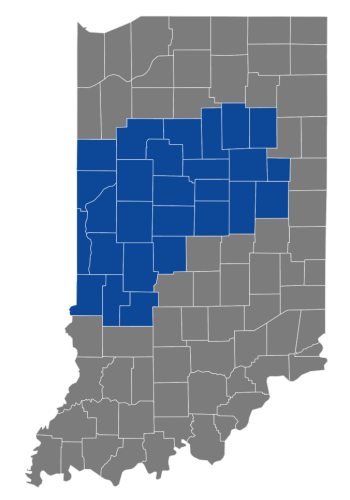
Rural doors also fail differently. Wind load, dust infiltration, and rodent pressure show up on farmhouses and acreages far more than on a suburban two-car garage, and standard door components aren't built to handle all three at once. Fairmountdoor has worked on garage doors across Indiana properties — including plenty of farms and acreages — long enough to know the failure patterns are predictable if you know where to look.
Who this is for
This guide is for owners of farmhouses, acreages, and rural properties where the garage or outbuilding door sits exposed to open wind, gravel or dirt driveways, and distance from town. If your nearest neighbor is a quarter mile away and your garage doubles as equipment storage, a workshop, or a barn entry, the standard homeowner checklist doesn't apply to you the same way. Before storm season hits, it's worth reviewing how to prepare your garage door for severe weather — rural exposure means you feel wind load and hail damage faster than a sheltered subdivision garage does.
What to look for in garage door repair for rural properties
Wind and weather sealing
Open fields mean nothing blocks wind from hitting the door face directly. A door rated for standard residential wind load can still flex and rack over years of exposure on an unsheltered property. Look for reinforced panels and check seal condition every spring and fall, not just after a bad storm.
Pest and moisture resistance at the base
Rural properties see far more rodent pressure than a suburban lot — mice, voles, and the occasional snake all find a gap under a worn bottom seal. A cracked or shrunk seal at the bottom of the door is the single most common entry point for pests and standing water on a farmhouse garage.
Opener horsepower for oversized or heavy doors
Many rural garages run wider doors to fit trucks, tractors, or trailers, and older farmhouses sometimes still have solid wood doors instead of lightweight steel. A 1/2 HP opener that's fine on a standard two-car door will strain, overheat, or stall on anything heavier — especially with grit in the tracks.
Power outage backup and manual release
Rural power grids drop more often than urban ones, and a garage door with no manual release plan means you're stuck if the opener won't run. Know exactly where the release cord is and confirm you can operate the door by hand before you need to in an emergency.
Remote and keypad range for long driveways
A driveway that runs 200+ feet from the road to the garage puts real distance between you and the opener. Stock remotes are tuned for short suburban ranges, and weak signal on a rural property is one of the most common repair complaints Fairmountdoor fields — often it's not a broken opener at all, just a remote that can't reach that far.
Get a rural garage door assessed
Weather sealing, opener sizing, and remote range — evaluated in one visit.
Top picks for rural garage door repair
1. Bottom seal replacement — the pest blocker. A worn bottom seal on an exposed farmhouse garage lets in more than draft; it's the top entry point for rodents and runoff after heavy rain. Replacing it typically takes under an hour and closes the gap completely. Full details on sizing and materials are in the bottom seal replacement guide. Buy.
2. Weatherstripping upgrade — the draft killer. Standard vinyl weatherstripping degrades faster on rural doors that face direct sun and wind with no windbreak nearby. A full weatherstripping replacement seals side and top gaps that a bottom seal alone won't touch — see the weatherstripping replacement breakdown for material options. Buy for any door older than 8-10 years or facing open wind.
3. 3/4 HP+ chain-drive opener — the workhorse. Oversized doors, solid wood panels, and dust-heavy tracks all demand more torque than a builder-grade 1/2 HP unit provides. Chain-drive units also tolerate outdoor temperature swings better than lighter belt-drive models. Check horsepower sizing against your door's weight and width in the opener horsepower guide before buying. Buy for wide or wood doors, Consider for standard lightweight steel.
4. Manual release and backup power check — the outage insurance. This isn't a purchase so much as a five-minute inspection: confirm the manual release cord works and know your outage procedure before a storm knocks out power. Rural grids see more frequent and longer outages than urban ones, and a door you can't manually open blocks a truck or tractor exactly when you need it most. Consider doing this check twice a year.
5. Extended-range remote and keypad — the driveway solution. A standard remote loses signal well before it reaches a barn or garage set 200+ feet from the road. Upgrading to an extended-range remote or a hardwired keypad solves this without touching the opener itself. Buy if your driveway exceeds 150 feet and you're losing signal today.
“If you can’t operate the manual release by hand in under a minute, you don’t have an outage plan — you have a locked garage.”
What to avoid
- Decorative window inserts on working doors. They look good on a farmhouse facade but crack fast under gravel kickup and equipment impact near barns and machine sheds.
- Universal remotes marketed as "long range" without a spec sheet. Range claims vary wildly, and a generic remote often performs worse than the opener's original unit on a long rural driveway.
- Ignoring sensor alignment after dust storms or harvest season. Grain dust and debris knock safety sensors out of alignment more on farm properties than anywhere else — a misaligned sensor will stop the door from closing at all, and it's often mistaken for a bigger mechanical failure.
Verdict comparison
| Fix | Solves | Cost driver | Verdict |
|---|---|---|---|
| Bottom seal replacement | Pests, water intrusion | Seal material, door width | Buy |
| Weatherstripping upgrade | Draft, wind exposure | Full perimeter length | Buy |
| 3/4 HP+ opener | Heavy or wide doors stalling | Door weight, drive type | Buy for heavy doors |
| Manual release check | Power outage lockout | None — inspection only | Consider (twice yearly) |
| Extended-range remote/keypad | Long driveway signal loss | Range spec, wiring | Buy over 150 ft driveways |
FAQ
What’s the best garage door fix for a rural property in 2026?
Bottom seal replacement is usually the highest-priority fix for rural properties in 2026 because it blocks pests and water intrusion, both of which are more common on exposed acreages than in town.
Is a bigger opener always better for a farmhouse garage?
No — a 3/4 HP or higher opener only makes sense for wide, heavy, or wood doors. A standard lightweight steel door on a smaller garage runs fine on 1/2 HP and doesn’t need the upgrade.
How much does garage door repair cost on a rural property?
Costs vary by the specific repair, but budgeting guidance and typical cost ranges for common repairs are covered in the garage door repair and replacement cost guide, since rural jobs sometimes carry a travel factor that in-town repairs don’t.
Why does my remote stop working halfway up my driveway?
Standard remotes are tuned for suburban distances and lose signal well before 150-200 feet. An extended-range remote or a hardwired keypad usually fixes it without replacing the opener.
Do rural garage doors need different weatherstripping than city homes?
Not different material, but rural doors need it replaced more often since open wind exposure and direct sun degrade seals faster than a sheltered suburban garage sees.
What causes a garage door to stop closing after harvest season?
Grain dust and field debris frequently knock the safety sensors out of alignment, which stops the door from closing as a safety measure — realigning the sensors usually resolves it in minutes.
Should I replace or repair an older farmhouse garage door?
It depends on the door’s age and whether the damage is cosmetic or structural — a straightforward comparison of repair versus replacement signs applies to farmhouse doors the same as any other.
How often should I check my garage door on a rural property?
Twice a year at minimum — once before winter and once before harvest or storm season — checking seals, sensor alignment, and manual release function each time.
One last thing
The repair call Fairmountdoor gets most often on rural properties isn't a broken spring or a dead opener — it's a misaligned safety sensor after a dusty harvest week, which stops the door from closing and gets mistaken for something far more expensive. Check the sensors first before assuming you need a bigger repair.
Related guides