Correctional facility overhead door installation covers the sally ports, secure vehicle bays, and loading docks that control who and what enters a jail or prison — and the spec sheet looks nothing like a warehouse door. A door that works fine at a distribution center can be a liability at a detention facility if it lacks the cycle rating, locking hardware, or forced-entry resistance the application demands.
- Correctional facility overhead door installation requires detention-grade hardware, not standard commercial-grade doors.
- Rolling steel doors outperform sectional doors on forced-entry resistance for sally ports and secure vehicle bays.
- Cycle count rating matters more here than in most commercial settings — high-traffic sally ports run through cycles fast.
- Fairmount Door treats correctional and government facility overhead doors as a security system, not just an access point.
- Backup power and manual release procedures are non-negotiable for lockdown scenarios in 2026 facility planning.
Why overhead door installation matters for correctional facilities
A correctional facility overhead door isn't just an entry point — it's part of the perimeter security plan. Sally ports need to hold two doors that never open simultaneously. Vehicle bays need clearance for transport vans without exposing staff to a security gap. Loading docks need doors that resist tampering from both sides.
The same considerations that apply to government building overhead door installation apply here, but correctional facilities push every requirement further: higher cycle counts, stricter locking hardware, and staff who need clear procedures for manual operation during a power failure or lockdown. Get the spec wrong and you're either compromising security or replacing a door within a few years instead of a couple decades.
Step 1: Audit your current door inventory and security zones
Before any correctional facility overhead door installation project starts, map what's already in place and where the gaps are.
- Walk every sally port, vehicle bay, and loading dock and note the door age and material
- Flag any door still running on a standard residential-duty or light-commercial operator
- Check for visible rust, panel damage, or track misalignment on rolling doors
- Note which doors control perimeter access versus interior zone separation
- Record current lock hardware type on each door
Step 2: Match door type to security zone
Not every opening in a correctional facility needs the same door. Interior loading docks and non-perimeter bays can run standard insulated steel sectional doors. Sally ports and any opening that touches the secure perimeter need something built for forced-entry resistance.
- Rolling steel doors for sally ports and vehicle sallyports facing the perimeter
- Insulated steel sectional doors for interior, non-perimeter loading docks
- Fire-rated overhead doors where fire code requires separation between cell blocks and other zones
- Avoid fabric high-speed doors on any perimeter-facing opening — they're built for speed, not resistance
This is where the door type decision gets made before hardware or automation enters the conversation. Fairmount Door specifies rolling steel doors for high-security buildings on perimeter-facing openings for this exact reason — sectional doors simply don't hold up the same way against a forced-entry attempt.
Step 3: Specify the right cycle count rating
A sally port door at a busy county jail can cycle dozens of times a day between transport vans, staff vehicles, and deliveries. A standard commercial door rated for light-duty use will fail years ahead of schedule under that load.
- Count realistic daily cycles per opening, not the manufacturer's minimum assumption
- Rate high-traffic sally ports and vehicle bays for heavy-duty, high-cycle operators
- Reserve standard commercial ratings for low-traffic interior bays only
- Document the rating decision so future replacement projects don't default to a lower spec
Getting this wrong is one of the most common — and most expensive — mistakes on a correctional facility project. Reviewing how to choose the right cycle count rating for a commercial door before finalizing a spec avoids a door replacement inside the first few years of service.
Step 4: Add detention-grade locking and security hardware
Standard commercial slide bolts and cane bolts aren't built for a facility where someone may actively try to defeat the lock. Detention-grade hardware changes the calculation.
- Specify interior-mounted locking mechanisms that can't be reached or manipulated from outside
- Use security bar systems rated for forced-entry resistance, not decorative slide locks
- Coordinate lock placement with the facility's existing key and credential system
- Add tamper-evident hardware where staff need to verify a door hasn't been compromised between shifts
Fairmount Door pulls hardware specs from commercial overhead door lock and security bar systems built for exactly this application rather than adapting standard commercial hardware after the fact.
Step 5: Build in redundant power and manual release procedures
A sally port door that won't operate during a power outage is a security and safety problem, not just an inconvenience. Correctional facilities need a documented fallback for every controlled opening.
- Install backup power on any operator controlling a perimeter or sally port door
- Document manual release procedures and post them at each control point
- Test the manual release quarterly, not just during initial commissioning
- Coordinate backup power timing with the facility's broader emergency power plan
Step 6: Position sensors and photo-eyes for tamper resistance
Standard photo-eye placement assumes a low-risk environment where nobody is trying to defeat the safety system. That assumption doesn't hold in a detention setting — sensors need to be positioned where they can't be blocked, covered, or manipulated from inside a controlled space.
- Mount photo-eyes higher or recessed where standard reach can't interfere with them
- Add secondary sensor coverage on any door controlling a two-door sally port sequence
- Test sensor response monthly on high-traffic openings
- Log any sensor fault immediately rather than bypassing it to keep the door moving
Step 7: Schedule installation around lockdown and shift schedules
Installing or replacing a door at a working correctional facility means coordinating around a schedule that doesn't pause for construction.
- Confirm install windows with facility security staff before scheduling
- Sequence work so at least one door in every two-door sally port sequence stays operational
- Keep crew credentials and background checks current before the crew arrives on site
- Plan for temporary security measures during the window when a door is out of service
Step 8: Train staff and set up an ongoing maintenance contract
A correctional facility overhead door installation isn't finished when the door closes for the first time. Staff need to know the manual override, and the facility needs a maintenance schedule that catches wear before it becomes a failure.
- Train shift staff on manual release and emergency operation, not just daily use
- Document the training so new hires get the same briefing
- Set inspection intervals tighter than a standard commercial building given the cycle load
- Put the whole program under a maintenance contract for overhead doors so inspections happen on schedule instead of after something breaks
Plan your facility’s door project
Get a spec review before you finalize a correctional facility overhead door installation.
Door options compared for correctional facility use
| Door Type | Best For | Key Limitation |
|---|---|---|
| Rolling steel security door | Sally ports and perimeter-facing vehicle bays | Heavier and slower cycle time unless paired with a high-speed operator |
| Insulated steel sectional door | Interior, non-perimeter loading docks | Lower forced-entry resistance than rolling steel |
| Fire-rated overhead door | Separating cell blocks or storage per fire code | Fire rating alone provides no forced-entry security |
| High-speed fabric door | Interior zone separation only, never perimeter | Not rated for tampering or forced entry |
Rolling steel doors win on any perimeter-facing sally port or vehicle bay in a correctional facility overhead door installation — sectional and fabric doors have their place inside the building, never on the perimeter.
Common mistakes correctional facilities make
- Specifying a standard commercial cycle rating instead of a detention-duty rating on high-traffic sally ports, which shortens door life by years
- Skipping backup power on controlled openings, leaving a sally port dead during an outage
- Using standard photo-eye placement that can be blocked or manipulated from inside a controlled space
- Treating a fire-rated door as a security door when the two ratings solve different problems
- Deferring maintenance contracts until after a door fails during a shift change, when a scheduled inspection would have caught the wear
“A cycle rating built for a warehouse loading dock won’t survive a sally port that runs 40 cycles a shift.”
FAQ
What door type is best for a correctional facility sally port?
Rolling steel security doors are best for sally ports because they offer higher forced-entry resistance than sectional or fabric doors. They’re built to withstand tampering from both sides of a controlled opening, which sectional doors are not designed for.
How much clearance does a correctional facility overhead door installation need?
Clearance depends on the vehicle types passing through — transport vans and delivery trucks need wider and taller openings than staff vehicle bays. A site walk-through before installation confirms the exact clearance for each opening rather than assuming a standard commercial size fits.
Is a rolling steel door more secure than a sectional door for a jail?
Yes, rolling steel doors generally offer better forced-entry resistance than insulated steel sectional doors. Sectional doors work fine for interior, non-perimeter openings but aren’t the first choice for a perimeter-facing sally port.
What cycle count rating do correctional facility doors need?
High-traffic sally ports and vehicle bays need heavy-duty, high-cycle operator ratings well above a standard commercial door, since they can cycle dozens of times per shift. Low-traffic interior bays can run standard commercial ratings.
How often should overhead doors at a correctional facility be inspected?
Inspection intervals should be tighter than a standard commercial building given the cycle load on sally ports and vehicle bays. A maintenance contract sets a fixed schedule so inspections happen before a failure, not after one.
Can overhead doors have backup power for lockdown scenarios?
Yes, backup power is standard practice on any operator controlling a perimeter or sally port opening at a correctional facility. Without it, a power outage can leave a controlled door inoperable during a lockdown.
Does a fire-rated overhead door also provide forced-entry security?
No, a fire rating and a security rating solve different problems. A fire-rated door meets code for separating zones during a fire, but it doesn’t provide the forced-entry resistance a perimeter security door needs.
Who installs overhead doors for correctional facilities in Indiana?
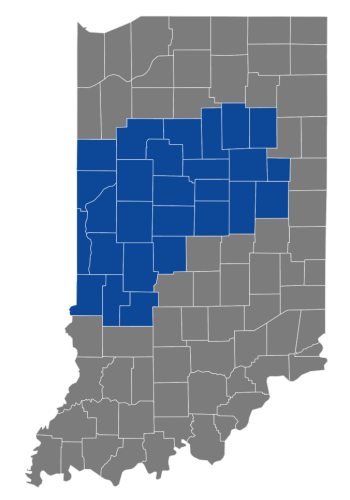
Fairmount Door handles commercial and government facility overhead door installation across Indiana, including detention-grade hardware and high-cycle door specifications for correctional projects in 2026.
One last thing
The detail most facility managers miss in 2026 isn't the door itself — it's the sensor placement. A standard photo-eye mounted at the usual height can be reached and blocked from inside a controlled space, which defeats the safety system without anyone noticing until an incident report gets filed. Position sensors where they can't be touched from either side of the opening, and test them on the same schedule as the lock hardware.
Related guides
- Rolling steel doors for high-security buildings
- How to set up a maintenance contract for overhead doors